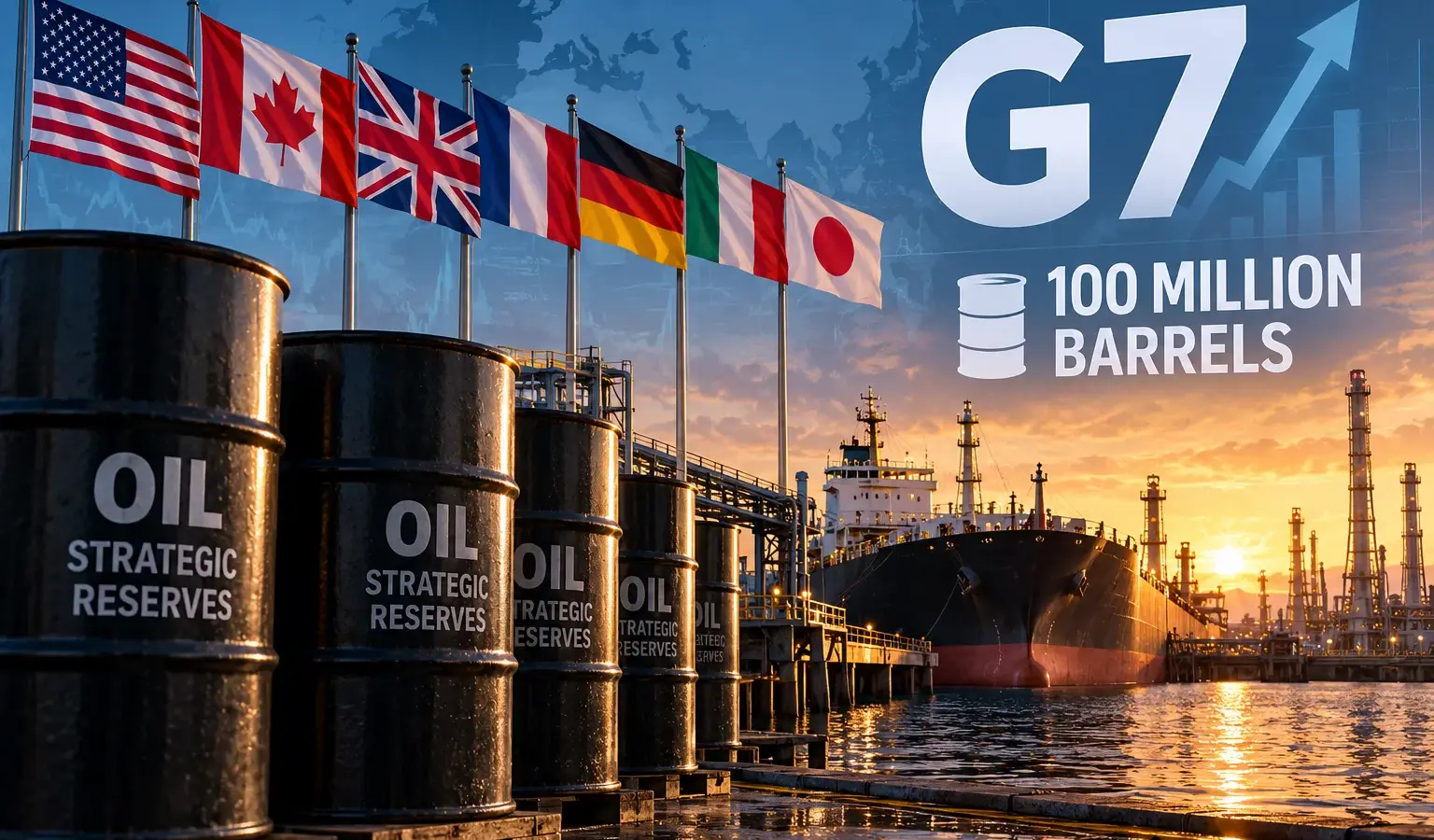
The Group of Seven has agreed on a coordinated release of up to 100 million barrels of oil from strategic petroleum reserves over a four-month period. The measure is designed to increase the availability of crude oil and refined petroleum products while reducing pressure on global energy markets.
The agreement comes at a time of unusually high volatility in oil markets, with fluctuations in crude prices creating additional pressure for households, businesses and industries that depend heavily on fuel. G7 governments are seeking to prevent temporary supply disruptions from developing into a broader energy crisis and to reduce the economic impact of rapidly changing oil prices.
The coordinated reserve release will be implemented through cooperation with the International Energy Agency (IEA). The plan includes a significant initial release of diesel supplies, with a substantial portion of the diesel component expected to reach the market during the first 20 days of the program.
In addition to releasing emergency oil stocks, G7 countries have agreed to coordinate refinery maintenance schedules, increase refinery utilization where possible and encourage oil-producing countries with significant refining capacity to increase production of refined petroleum products.
Why Is the G7 Releasing Strategic Oil Reserves?
Strategic petroleum reserves are designed to provide governments with an emergency supply of crude oil that can be released when global energy markets face severe disruptions. These reserves can help compensate for temporary shortages and provide additional supply when commercial inventories or production cannot respond quickly enough.
The decision by G7 countries to coordinate a release reflects concerns about the potential economic consequences of continued oil market instability. Oil prices affect far more than the cost of filling a vehicle. Petroleum products are used throughout transportation, manufacturing, agriculture, logistics and many other sectors of the economy.
A sustained increase in energy costs can therefore contribute to higher prices across a wide range of goods and services. Businesses facing higher fuel and transportation expenses may eventually pass part of those costs on to consumers.
By adding additional oil to the international market, governments hope to increase supply and reduce some of the pressure created by current market conditions.
How Much Oil Will the G7 Release?
The coordinated program involves up to 100 million barrels of petroleum reserves. The release is expected to take place over approximately four months rather than entering the market entirely at once.
A phased approach allows governments to respond to market conditions while maintaining the ability to manage their emergency inventories. The timing of individual releases can also depend on national reserve systems, domestic fuel requirements and coordination with international energy agencies.
| Measure | Planned action | Expected purpose |
|---|---|---|
| Strategic oil reserves | Release of up to 100 million barrels | Increase available oil supplies |
| Release period | Approximately four months | Provide sustained market support |
| Diesel supplies | Front-loaded release | Address pressure in the refined fuel market |
| Refinery operations | Coordinate maintenance schedules | Avoid simultaneous capacity reductions |
| Refinery utilization | Increase output where feasible | Expand refined petroleum production |
| International coordination | Work through the IEA | Monitor implementation and market conditions |
Diesel Supply Is a Major Focus of the Plan
Although crude oil remains central to the emergency response, diesel has become a particularly important part of the G7’s energy strategy. Diesel fuel is essential for freight transportation, agriculture, construction, industrial machinery and numerous commercial activities.
Supply disruptions affecting diesel can therefore have consequences that extend well beyond motorists. Trucks, agricultural equipment, ships, generators and heavy machinery frequently depend on diesel or related middle-distillate fuels.
The G7 plan calls for a substantial diesel release during the early stage of the operation. Front-loading part of the response is intended to address immediate pressure in refined fuel markets rather than waiting for the full four-month program to take effect.
Increasing refinery output is another important element. Additional crude oil alone cannot immediately solve a shortage of diesel or other refined products because crude must first be processed into usable fuels. Refinery capacity, maintenance schedules and regional fuel infrastructure therefore play a major role in determining how quickly additional crude supply can translate into additional fuel availability.
G7 Countries Will Coordinate Refinery Maintenance
Another part of the agreement focuses on refinery maintenance. Refineries periodically need to shut down units for maintenance, inspections and repairs. These outages are a normal part of the energy industry, but several major facilities being offline simultaneously can create additional pressure on fuel supplies.
The G7 intends to coordinate maintenance schedules where possible to reduce the risk of multiple large facilities reducing production at the same time.
The countries also plan to temporarily increase refinery utilization rates where technical and market conditions allow. Higher utilization could increase the production of gasoline, diesel and other refined petroleum products without requiring the construction of entirely new facilities.
Why refinery capacity matters
The relationship between crude oil supplies and fuel prices is not always straightforward. Even when sufficient crude is available, consumers can face higher prices if refineries do not have enough capacity to process it into finished products.
Several factors can affect refined fuel availability:
- planned and unplanned refinery shutdowns;
- maintenance schedules at major processing facilities;
- regional differences in fuel demand;
- transportation and pipeline capacity;
- availability of diesel and other refined products;
- changes in international trade flows;
- inventory levels held by refiners and distributors.
For this reason, the G7 response combines crude oil reserve releases with measures intended to support refinery operations and refined fuel production.
What the Oil Reserve Release Could Mean for Oil Prices
The main objective of releasing strategic petroleum reserves is to increase the amount of oil available to the market during a period of supply stress. Additional supply can reduce some upward pressure on crude prices, although the final impact depends on many other factors.
Global oil prices are influenced by production levels, consumption, inventories, geopolitical developments, transportation capacity, refinery operations and expectations about future supply and demand.
A release of 100 million barrels is significant, but its effect also depends on the scale and duration of the market disruption. If supply problems persist for an extended period, emergency reserves may provide temporary relief without eliminating the underlying shortage.
The market may also react before the physical oil is delivered. Traders often respond to expectations about future supply, meaning that announcements of coordinated reserve releases can influence market sentiment as well as actual inventories.
Could the G7 Oil Release Lower Fuel Prices?
The coordinated reserve release is intended to reduce pressure on energy markets, but it does not guarantee a specific decline in gasoline or diesel prices.
Retail fuel prices depend on much more than the international price of crude oil. Taxes, refinery margins, transportation costs, exchange rates, local inventories and regional supply conditions can all influence the amount consumers ultimately pay at filling stations.
For businesses, the potential benefit could also appear indirectly. More stable energy prices can make it easier for transportation companies, manufacturers and other fuel-intensive businesses to plan their operating costs.
However, the size of any consumer benefit will depend on how global oil markets respond to the additional supply and whether other disruptions occur during the four-month release period.
G7 Rejects Restrictions on Energy Trade Between Member States
The G7 agreement also addresses international trade in energy products. Member countries have reaffirmed their intention to avoid restrictions on energy and energy-product exports between G7 members.
This approach is intended to keep existing trade channels open during a period of market stress. Restrictions on energy exports can potentially reduce the amount of fuel available to importing countries and create additional price pressure.
The G7 has also called for major oil-producing countries to avoid measures that could further tighten international markets. Maintaining open trade flows is particularly important when individual regions experience temporary shortages of specific refined products.
Why Diesel Exports Are Receiving Attention
Diesel has become one of the most closely watched segments of the petroleum market because of its importance to commercial activity. A disruption in diesel availability can affect transportation companies, agricultural producers, construction firms and industrial operators.
Concerns about possible restrictions on diesel exports had therefore raised questions about whether international fuel supplies could become tighter.
The G7’s coordinated approach emphasizes maintaining energy trade rather than introducing new restrictions between member countries. This is intended to reduce the possibility that national measures could amplify existing market tensions.
The Role of the International Energy Agency
The International Energy Agency will play an important role in monitoring the implementation of the G7’s energy commitments. International coordination is particularly important because petroleum markets operate across national borders.
Oil produced in one region may be refined in another country and consumed thousands of kilometers away. A disruption in one part of the supply chain can therefore affect markets far beyond the country where the original problem occurred.
Coordinated reserve releases can make the response more predictable and help governments avoid competing against one another for limited supplies.
How Strategic Petroleum Reserves Work
Strategic petroleum reserves are government-controlled stocks of crude oil or petroleum products maintained specifically for emergencies. They are different from the commercial inventories held by oil companies, refiners and fuel distributors.
Governments typically build these reserves during periods when markets are functioning normally. During major supply disruptions, the reserves can then be released to increase market availability.
The concept is based on the idea that governments need a buffer against unexpected interruptions in oil supplies. Such interruptions can result from geopolitical conflicts, natural disasters, infrastructure failures, production problems or other major disruptions.
Reserve releases are generally considered an emergency tool rather than a permanent solution to structural problems in the energy market.
Potential Impact on the Global Economy
Energy prices have a strong connection with broader economic conditions. Oil and refined petroleum products are essential inputs for transportation and industrial production, which means changes in energy costs can affect inflation and business expenses.
Lower or more stable energy costs can reduce pressure on companies that rely heavily on transportation and fuel. Conversely, a prolonged period of high oil prices can increase operating costs and contribute to higher prices for consumer goods.
The G7’s strategy therefore has implications beyond the oil industry. The objective is to support energy market stability and reduce the risk that temporary supply problems will create wider economic disruption.
What Happens After the Four-Month Release?
The four-month period is intended to provide additional supply during a period of market pressure, but strategic reserves cannot be released indefinitely. Once emergency stocks are used, governments may eventually need to rebuild their inventories.
The longer-term situation will therefore depend on developments in global oil production, refinery capacity, consumption and international trade.
If supply conditions improve, the temporary reserve release could help bridge the gap until normal market conditions return. If major disruptions continue, governments could face difficult decisions about how quickly to replenish strategic inventories while maintaining sufficient emergency protection.
What to Watch in Global Oil Markets
The G7 reserve release is only one factor influencing the international energy market. Investors, businesses and consumers will also be watching several other indicators during the coming months.
- Crude oil production: Changes in production from major oil-producing countries can significantly affect global supply.
- Diesel inventories: Refinery output and stock levels will be important indicators of pressure in the refined fuel market.
- Refinery utilization: Higher utilization could increase the availability of gasoline, diesel and other petroleum products.
- Global demand: Economic growth or a slowdown can change how much oil the world consumes.
- Energy trade restrictions: New export controls or other trade measures could alter international supply flows.
- Strategic reserve levels: Markets will monitor how quickly emergency inventories are being depleted and eventually replenished.
Conclusion
The G7’s decision to coordinate the release of up to 100 million barrels of strategic petroleum reserves represents a major international response to instability in global oil markets. The four-month program combines emergency crude oil supplies with measures aimed at increasing refinery output and improving the availability of diesel and other refined petroleum products.
The strategy is designed to provide additional supply while governments work to reduce the risk of energy price shocks affecting households and businesses. Coordinated refinery maintenance and efforts to preserve international energy trade are intended to strengthen the response further.
The ultimate effect on oil and fuel prices will depend on a much wider set of market conditions, including global production, demand, refinery capacity, inventories and international trade. Nevertheless, the coordinated release demonstrates the importance governments place on maintaining stable energy supplies during periods of exceptional market volatility.